

Long before sensors or machines can help, these dogs step in using one thing they do better than any technology we have: their noses. Generations of breeding and training shaped certain breeds to track missing people, detect dangerous materials, and follow scent trails most of us would never notice. This ability is both impressive and relied on every day in real situations when they’re used in a working capacity. Even as pets, you can still see flashes of that focus when they lock onto a smell and refuse to let it go.


Bloodhound


When accuracy matters more than speed, Bloodhounds are the standard. Their noses can follow scent trails that are days old, even after people or vehicles have passed through. Law enforcement and search teams rely on them because they don’t guess or rush. Once a Bloodhound locks onto a trail, it sticks with it until there’s nowhere left to go.
Beagle


Beagles may look friendly and unassuming, but that’s part of what makes them so effective. Airports and border crossings use them because people aren’t intimidated, which keeps situations calmer than using pointy ear dogs. Behind that sweet face is a nose that doesn’t miss much, especially when food or restricted items are involved. They work patiently and methodically without drawing attention.
Basset Hound


Built low to the ground with ears that help trap scent, Basset Hounds specialize in slow, deliberate tracking. They were bred to stay on a trail no matter how long it takes, which makes them reliable in situations where persistence matters. Their pace might not be fast, but their focus rarely breaks once they’ve started working.
German Shepherd


German Shepherds combine scenting ability with control, intelligence, and confidence. That balance makes them a top choice for police and military units worldwide. They can track suspects, locate explosives, and follow human scent while staying responsive to commands. Their reliability under pressure is what keeps them in high-stakes roles.
Labrador Retriever

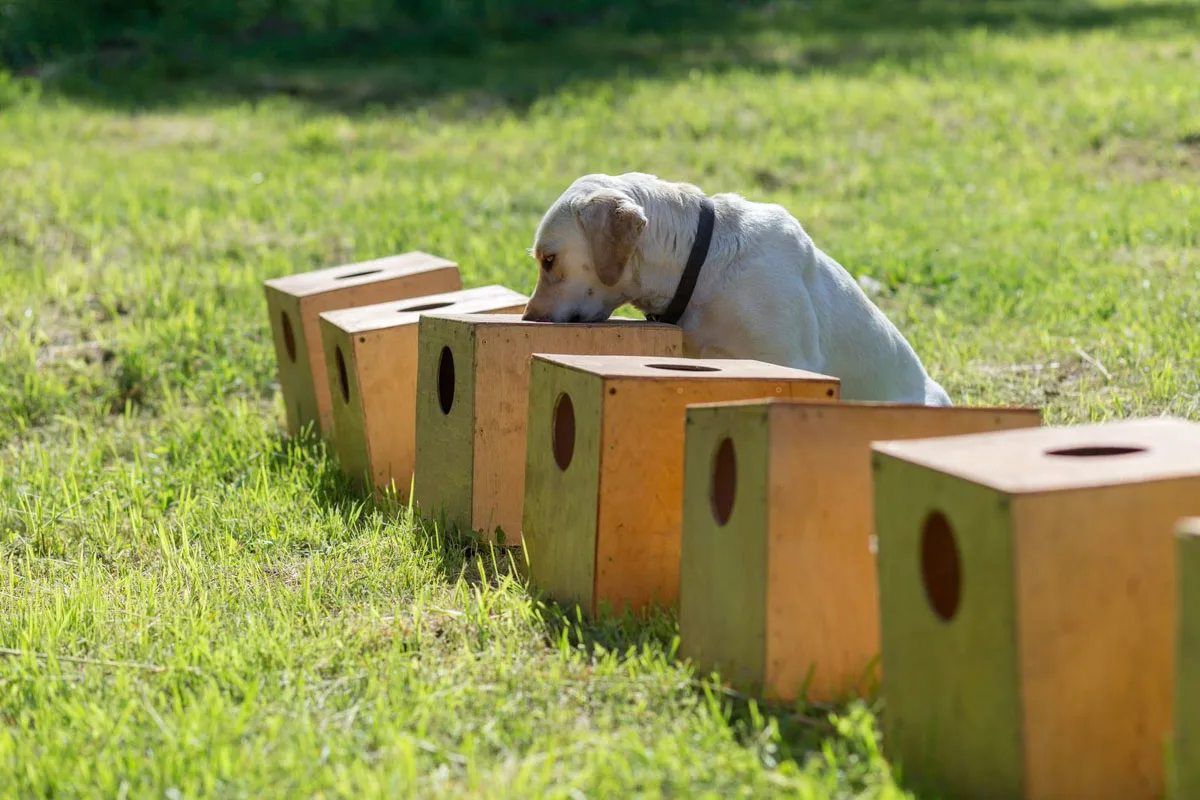
Labs are trusted because they stay steady and chill in chaotic environments. Their noses are sharp, but just as important is their ability to work calmly in crowds, airports, and public spaces. Detection programs rely on them to search luggage, cargo, and vehicles without escalating tension. Their focus without becoming reactive is a large part of their success in these roles.
Dachshund


Originally bred to hunt underground, Dachshunds bring determination to scent work that surprises people. Their size allows them to search tight spaces where larger dogs can’t go. When they’re working a trail, they don’t get distracted easily, and they tend to follow scent patterns others overlook. Their stubborn streak becomes an asset in tracking tasks.
English Springer Spaniel


Springer Spaniels thrive in roles that demand energy and consistency. They can work long shifts scanning vehicles, luggage, or open areas without losing focus. Their enthusiasm keeps them engaged, while their nose does the detailed work. Teams value them because they stay reliable even during repetitive detection jobs.
Belgian Malinois


Precision matters with Malinois. Their noses are excellent, but it’s their drive and control that earn trust in tactical situations. They can switch from detection to pursuit without hesitation. Search and rescue teams rely on them in environments where accuracy and speed have serious consequences.
Coonhound


Coonhounds were bred to follow scent trails across long distances and difficult terrain. That endurance carries over into modern tracking work. They don’t give up easily, even when conditions are rough or the trail goes cold. Their ability to stay engaged over time makes them valuable in missing person searches.
Golden Retriever


Goldens bring patience and reliability to search and rescue roles. They’re often chosen for disaster response because they stay calm around debris, noise, and unfamiliar environments. Their noses are strong, but it’s their steady temperament that allows them to work effectively alongside large teams and equipment.
Pointer


Pointers use scent differently than many other tracking breeds. They locate and indicate rather than pursue, which makes them useful in controlled search environments. Their ability to stop and signal helps handlers narrow down search areas quickly.
Weimaraner


Weimaraners were bred for long tracking sessions, and that stamina still shows. They cover ground efficiently while staying alert to changes in scent. In detection and tracking roles, they’re trusted to maintain focus without burning out early. Their athletic build supports long searches where endurance is crucial.
Otterhound


Otterhounds bring a rare skill set to scent work, especially around water. Their noses can track scent trails that pass through rivers or wetlands, where many dogs struggle. Search teams value them for cases involving waterways because they don’t lose the trail when conditions change.
A Dog’s Nose Is 10,000+ Times More Powerful Than Ours & They Hate These 15 Smells


Dogs have a sense of smell that’s said to be up to 10,000 to 100,000 times stronger than ours, so it’s no surprise that some scents hit them like a slap in the face. While we might love the smell of fresh coffee or a spritz of perfume, your dog’s probably thinking, “Please, no.” Some smells are just too intense for their sensitive noses.
Read it Here: A Dog’s Nose Is 10,000+ Times More Powerful Than Ours & They Hate These 15 Smells
13 Things Dogs Can Smell That Humans Can’t

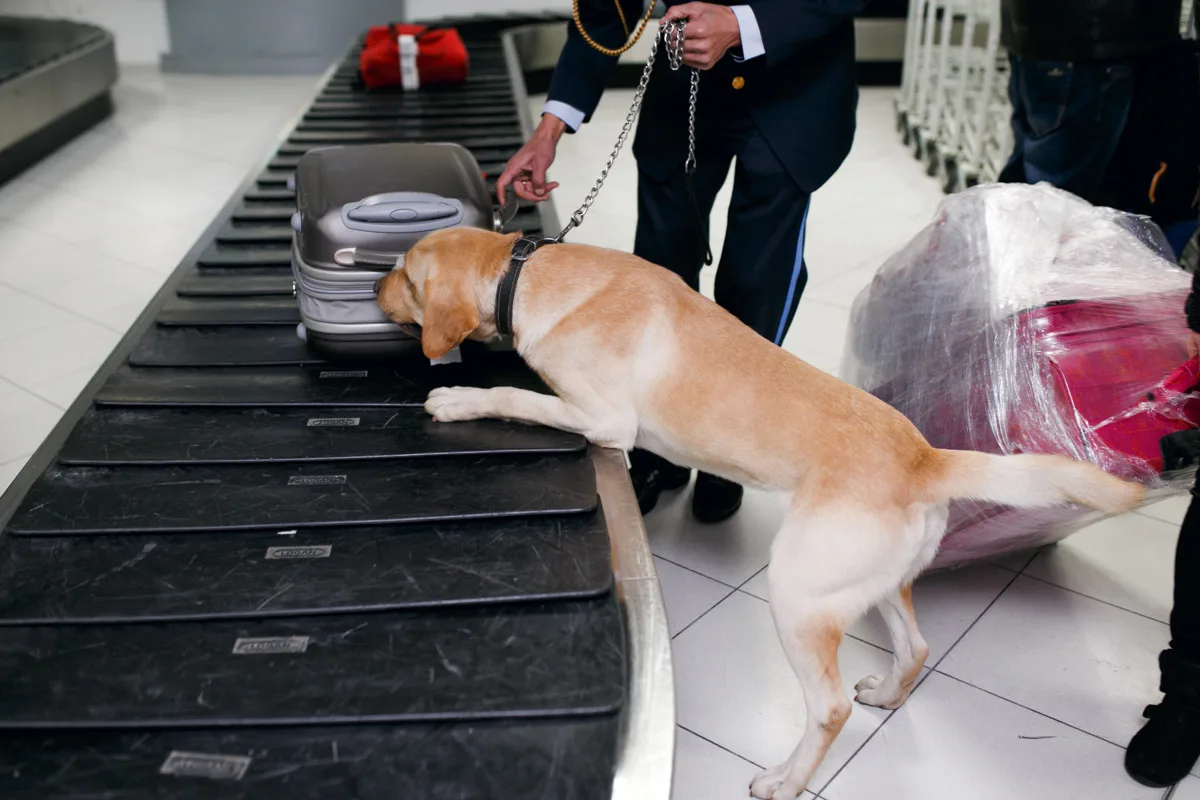
Dogs have noses that put ours to shame. While we’re busy missing out on half the world’s scents, dogs are out there detecting things we wouldn’t even think to sniff for. From the everyday to the downright extraordinary, their sense of smell is a superpower we can only dream of. Whether it’s picking up on subtle changes or detecting things we’ll never know are there, dog breeds with exceptional noses, trained for tasks like tracking, hunting, and detection, showcasing their unique scenting abilities.dogs prove time and again that they’ve got us beat in the scent department.
Read it Here: 13 Things Dogs Can Smell That Humans Can’t