

Food guarding can quickly become dangerous when a dog feels the need to protect their food from anyone who comes too close, especially in homes with kids, other pets, or frequent visitors. What often starts as stiff body language or growling can escalate into snapping or biting if the behavior is ignored or handled the wrong way. In most cases, food guarding is rooted in fear and insecurity rather than true aggression, which is why punishment tends to make the problem worse instead of better. With a thoughtful, consistent approach, it’s possible to lower that anxiety and create a mealtime routine that feels safe and predictable for everyone involved.


Create a calm feeding setup


Dogs who guard food often feel rushed or watched. Feeding your dog in a quiet, low-traffic area helps take pressure off the situation. When they’re not worrying about people or pets moving around nearby, they’re more likely to relax and focus on eating instead of defending their bowl. Over time, this calmer setup can lower their overall anxiety around meals.
Build trust through controlled hand-feeding


Hand-feeding works because it reframes how your dog sees you around food. Instead of viewing hands as a threat, they start to associate your presence with food arriving, not disappearing. You don’t have to do this forever. Even short sessions can help rebuild trust and reduce the instinct to guard.
Slow meals down to lower tension


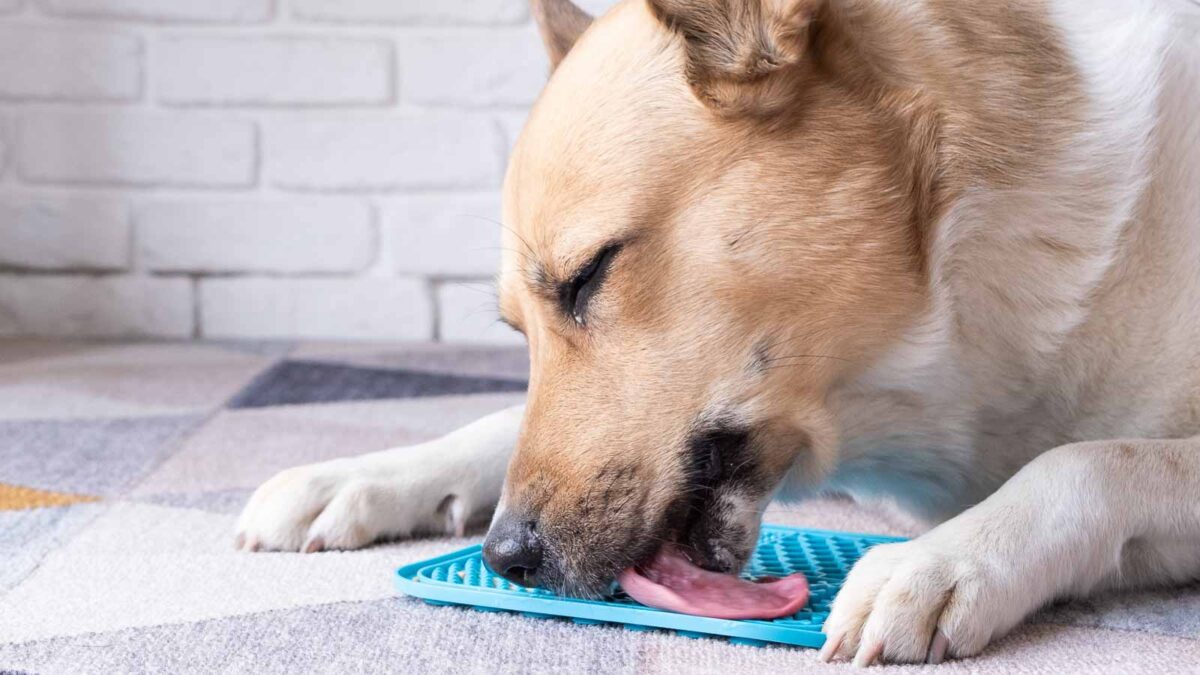
Dogs that inhale their food tend to stay on edge the entire time they’re eating. Using a slow feeder or puzzle bowl stretches out mealtime and gives them something to focus on besides guarding. The mental effort also helps burn off nervous energy, which can make a noticeable difference in how reactive they feel around food.
Practice being nearby without interference


Standing near your dog while they eat can be helpful if it’s done gradually and respectfully. Start far enough away that they stay relaxed, then slowly decrease the distance over multiple meals. The goal isn’t to hover or test them. It’s to show them that someone nearby doesn’t automatically mean their food is at risk.
Teach food boundaries outside of mealtime


Working on cues like leave it or wait when food is not involved helps set expectations without pressure. When dogs learn they can pause and back off from food in low-stakes situations, it becomes easier to apply those skills later. This reinforces the idea that food doesn’t disappear just because they stop guarding it.
Avoid punishment around food


Correcting or scolding a dog for guarding often makes the behavior worse. It confirms their fear that food really is something to protect. Instead, focusing on calm reinforcement helps your dog feel safer. When guarding doesn’t feel necessary, it naturally starts to fade.
Feed dogs separately if you have more than one


Competition is a major trigger for food guarding. Feeding dogs in different rooms or crates removes that pressure entirely. Each dog can eat at their own pace without watching another dog nearby. This simple change often reduces guarding behavior faster than people expect.
Reward calm behavior during meals

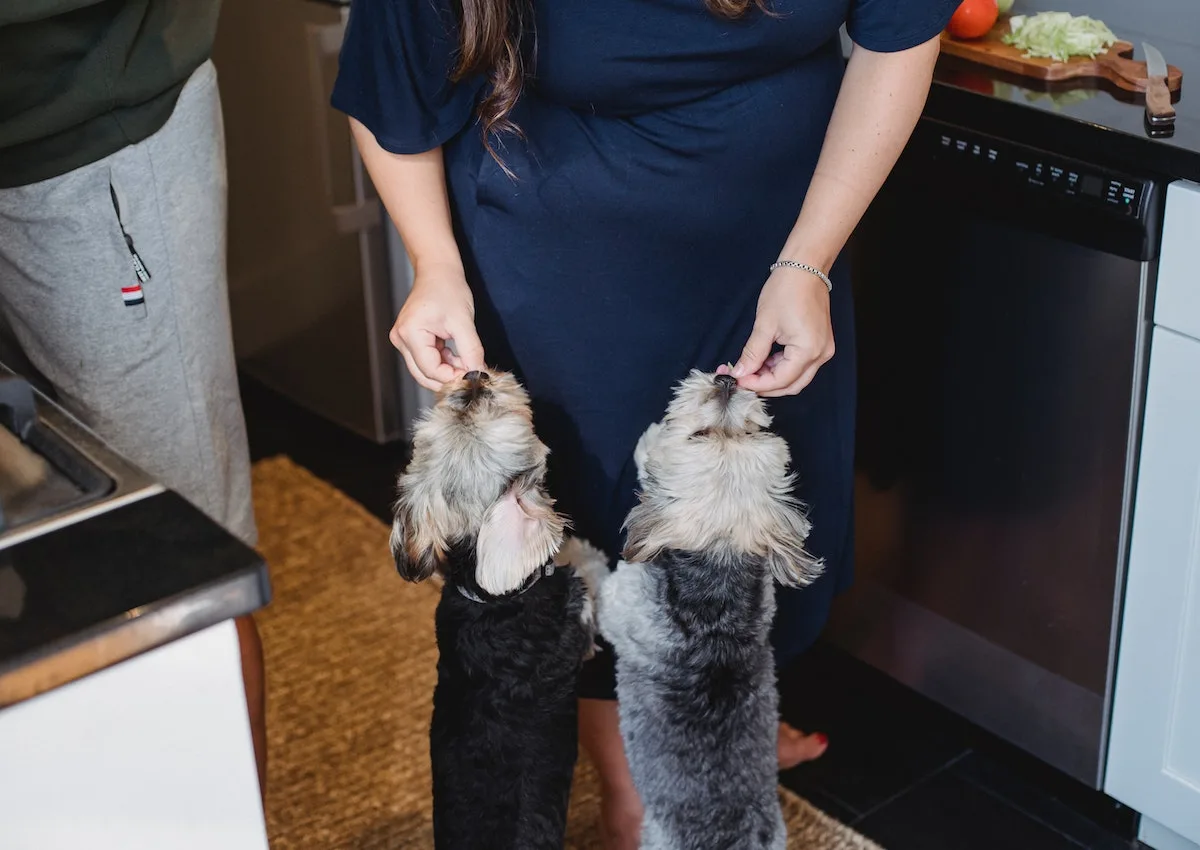
If your dog stays relaxed while eating and you’re nearby, quietly reinforce that moment. A tossed treat or calm praise after they finish helps them connect relaxed behavior with positive outcomes. Over time, they start to expect good things when people are present, not conflict.
Change how bowl interactions happen


Instead of taking food away, try adding to it. Dropping extra food into the bowl while your dog eats helps flip the script. Your approach starts to predict more food, not loss. Once your dog is comfortable, brief bowl lifts followed by immediate returns can be introduced slowly.
Stick to a predictable feeding routine

Dogs feel more secure when meals happen consistently. Knowing food arrives at the same times every day reduces the fear of scarcity. When your dog trusts that meals aren’t random or threatened, guarding often becomes less intense.
Bring in professional support when needed


Some food guarding runs deeper and benefits from expert guidance. A trainer or behaviorist can identify what’s driving the behavior and tailor a plan that fits your dog’s history. Getting help early can prevent the issue from escalating and make the process less stressful for everyone involved.
9 Dog Breeds That Are Extremely Food-Motivated (And How To Work With It)


Some dogs act like food is their entire reason for existing, and for certain breeds, that’s not too far from the truth. These food-driven pups will do just about anything for a treat, which can be both a blessing and a challenge. On the bright side, their snack obsession makes them easy to train. But if you’re not careful, it can lead to some unhealthy habits. Here are the breeds that are most food-motivated and how to manage that appetite without turning them into treat-demanding divas.
Read it Here: 9 Dog Breeds That Are Extremely Food-Motivated (And How To Work With It)
7 Tips To Stop Your Dog From Stealing Food Off The Table


Every dog owner has been in this situation at some point — one minute your plate is full, the next, your dog is making off with your sandwich like some kind of four-legged ninja. Dogs have an impressive knack for swiping food the second you look away, but it doesn’t have to be a battle of wits every meal. With a few smart moves (and maybe some patience), you can outsmart your furry thief and enjoy your dinner in peace.
Read it Here: 7 Tips To Stop Your Dog From Stealing Food Off The Table
*Select images provided by Depositphotos.