


Dog training methods can spark a lot of debates. Some techniques promise quick results, while others focus on building trust over time. But which ones really work, and which ones might do more harm than good? Here’s a look at 10 controversial dog training methods and their effectiveness.


Shock Collars


Shock collars can deter bad behavior quickly but may cause fear, anxiety, and aggression in dogs. They are considered inhumane by many trainers.
Choke Chains


Choke chains may stop pulling in the short term but can cause physical injury and emotional stress. They are often criticized for being cruel.
Alpha Rolling


Alpha rolling is forcing a dog onto its back to establish dominance. It’s deemed generally ineffective and can increase fear and aggression in dogs. It is not recommended due to its potential for harm.
Prong Collars


Prong collars can reduce pulling but can cause physical harm and stress to the dog. They are considered inhumane by many experts.
Cesar Millan’s Techniques


Methods popularized by Cesar Millan, including “calm assertive energy” and physical corrections are considered by some people to be effective, but they are highly controversial due to their emphasis on dominance and physical corrections, which can lead to fear and aggression.
Negative Reinforcement


Negative uses unpleasant stimuli to encourage a desired behavior. It can be effective but may lead to a fear-based relationship with the dog. Positive reinforcement is generally preferred for building trust and confidence.
Clicker Training with Punishment


Clicker training with punishment can be confusing for dogs and may not be as effective as positive reinforcement methods. Combining clicker training with punishment is generally discouraged.
Force-Free Training


Force-free training focuses on positive reinforcement and avoiding any physical corrections. It is highly effective for building a strong, trusting relationship with the dog. However, it requires consistency and patience from the trainer.
E-Collars (Electronic Collars)


E-collars are used for remote training and can be effective for off-leash control. However, like shock collars, they can cause fear and anxiety if not used correctly. Proper training and usage are crucial.
Aversive Conditioning


Aversive conditioning uses unpleasant stimuli to discourage unwanted behaviors. While it can stop the behavior temporarily, it can also damage the dog’s trust and lead to anxiety or aggression.
How To Clicker Train Your Dogs
Clicker training is a popular and effective method for teaching young and old dogs new behaviors and commands using positive reinforcement. By using a clicker — a small handheld device that makes a distinct clicking sound — you can communicate with your dog and reward desired behaviors precisely.
Read it Here: How To Clicker Train Your Dogs
How To Properly Train Your Dog On E-Collar

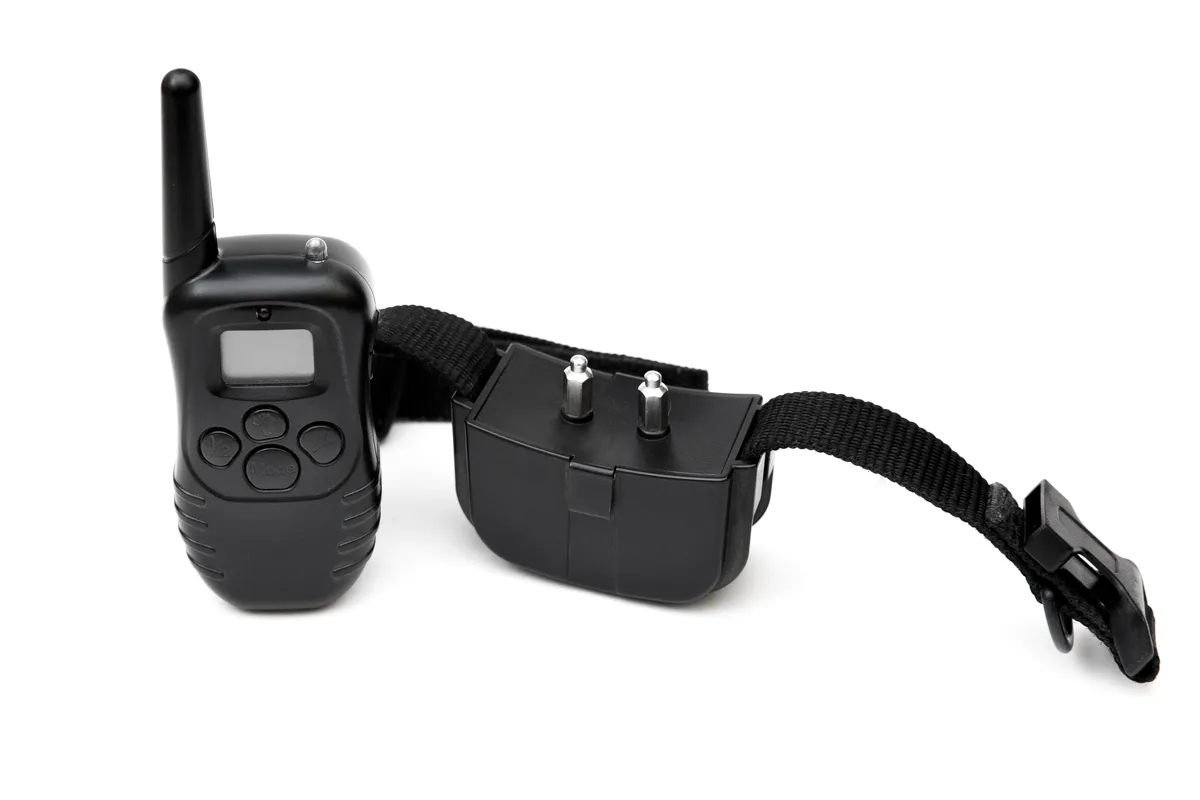
Electronic collars, commonly known as e-collars, can be an excellent training tool for dogs when used responsibly and with proper guidance. E-collars can be an effective means of communication during the training process for dogs.
Read it Here: E-Collar Training For Dogs
*Select images provided by Depositphotos.